

CAD communication tools have evolved over the past 60+ years. At Design Engine, we call CAD communication tools. From 2D line drawings to 3D CAD tools, and in turn, these always placed a demand on the speed and innovation of the computers that operate them. Mainframe first, followed by Unix-based processors and Windows NT circa 1993 before moving on to Dell Precision mobile workstations.
Did you know that Dell computers were designed on HP Unix workstations?
In the 1960s, large Automotive and Aerospace companies began to develop their own proprietary CAD/CAM systems for internal use. Yamaha had developed a home-grown system for product development, as well as Boeing & HP, because there was nothing on the market. IBM even had a parametric sheet metal package in 1985-86 before PTC, but they never took to market. Only the most progressive companies had access to computer-aided design. It was debatable whether CAD was more productive than traditional techniques, as it was all 2-dimensional. Changes to the drawing were so key because the final output was so clean. CATIA started as an in-house development by French aircraft manufacturer Avions Marcel Dassault (AMD). That software helped to develop Dassault’s Mirage fighter jet.
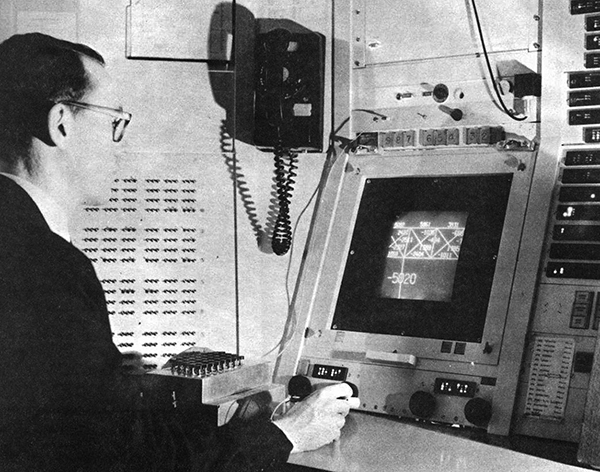
History of CAD PLM & FEA
1941 – Hrennikoff and Courant developed mesh discretization methods for solving elasticity and structural analysis problems in civil and aeronautical engineering. This framework method utilized lattice discretizations.
1949 – John T. Parsons and Frank Stulen pioneered Numerical Control (NC) in 1949.
1952 – The Massachusetts Institute of Technology (MIT) and Richard Kegg developed the first CNC prototype in 1952.
1957 – PRONTO Built by Patrick Hanratty, this was the first commercial numerical-control programming system, sparking everything that is CAD.
1958 – The first commercial CNC machines hit the market in 1958. Richard Kegg collaborated with MIT to develop the Cincinnati Milacron Hydrotel, widely considered the first commercial CNC machine. These machines were formally patented in 1958
1959 – General Motors and IBM built the computer system DAC-1 (Design Augmented by Computers) to facilitate the design of cars.
1960 – William Fetter from Boeing coined the term “computer graphics” for his human factors cockpit drawings.
1960 – Pierre Bézier proposed to Renault’s management that the company develop a method for mathematically defining automobile surfaces.
1960 – University of California, Berkeley professor Ray Clough published a pivotal paper officially coining the term “finite element”.
1960 – Sketchpad Built by Ivan Sutherland, this was the first to ever use a total graphic user interface; users wrote with a light pen on an x-y pointer display, let users constrain properties in a drawing, and created the use of “objects” and “instances”.
1965 – NASTRAN (NASA Structural Analysis) is developed as a structural analysis solver tool.
1967 – MEDUSA is a CAD program used in the areas of mechanical and plant engineering by manufacturers and Engineering, Procurement and Construction (EPC) companies. The system’s history is closely tied to the beginnings of mainstream CAD and the research culture fostered by Cambridge University and the UK government as well as the resulting transformation of Cambridge into a world-class tech center in the 1980s. Later purchased by PTC with the Computervision purchase in 1998, this tool later evolved into Creo Schematics
1968 – Evans & Sutherland was founded by David Evans and Ivan Sutherland. The tools developed into Flight simulators (early VR). Their use in movies and special effects was used by all the major news stations of the 80’s. The first movie was Tron in 1982, and later all the news channels used this software to create amazing lead-ins to local channel Television.
1970 – base code for a tool later called Ansys was developed by Dr. John Swanson as Swanson Analysis Systems, Inc. (SASI). After Westinghouse rejected his idea to automate manual engineering calculations, Swanson wrote the first finite element analysis (FEA) code in his farmhouse.
1971 – ADAM: Built by Patrick Hanratty, this interactive graphic design, drafting, and manufacturing system was written in Fortran and designed to work on virtually every machine, a huge hit that went on to be updated to work on 16 and 32-bit computers, today 80% of CAD programs can be traced back to the roots of ADAM.
1972 – IBM releases VM/CMS mainframe operating system (virtual machine/conversational monitor system). Machines running VM/CMS could be used for batch computing or time-sharing.
1972 – United Computing, Inc. releases UNIAPT, one of the world’s first end-user CAM products.
1973 – The company purchases the Automated Drafting and Machining (ADAM) software code from MCS in 1973. The code became a foundation for a product called UNI-GRAPHICS, later sold commercially as Unigraphics in 1975.
1976 – McDonnell Douglas acquired United Computing, which developed NX, establishing the software’s roots in the aerospace sector.
1977 – CATIA started as an in-house development called CATI by French aircraft manufacturer Avions Marcel Dassault, or “Dassault Aviation,” for Dassault’s Mirage fighter jet. The software was later adopted by the aerospace, automotive, shipbuilding, and other industries.
1977 – Dr. Dick Newell, together with colleague Tom Sancha, formed a company called Cambridge Interactive Systems or CIS, and primarily concentrated on 2D CAD. CIS had developed an electrical cabling solution initially called CABLOS, which was first purchased by Dowty Engineering in about 1979. Another early adopter was BMW, which used the system for car wiring diagrams. CABLOS soon became known and sold as the MEDUSA drafting system under CIS, concentrating initially on schematic drafting. This utility was later acquired by PTC and became Routed Systems Designer, then Creo Schedmatics.
1977: Digital Equipment Corporation (DEC) releases the VAX 11/780 running the 32-bit virtual memory VMS operating system. These machines would be used for batch processing, time-sharing, and real-time computing. They came with integrated computer networking and standardized methods for calling between programming languages.
1978 – Shape Data completed the industry’s first commercial release of a solid modeling kernel – called Romulus
1980 – IGES allows users to transfer their 3D designs between CAD software programs. Once STEP was released, IGES did not get updated further, on its way out but still accepted in many places.
1981 – CATIA Multi-platform CAD software, still in use today. CON: Developers failed to see the value of parametric and were forced by the industry to adopt parametric and become a constraint feature-based modeler that it is now. Dassault Systèmes now owns SolidWorks & Catia
1982 – Autodesk was founded in this year by John Walker, who led to the two-dimensional system AutoCAD and the famed DXF format. AutoCAD – Developed by Autodesk, this was the first 2D design CAD software made for PCs instead of mainframe computers or minicomputers. DXF was originally introduced in December 1982 as part of AutoCAD 1.0
1982 – CATIA was launched as V1 first customers being Grumman (Airplane, USA) – NECMA (Jet Engine, France) -Daimler-Benz (Automotive, Germany) -BMW (Automotive, Germany) -Honda (Automotive, Japan)
1982 – Sun Microsystems. Founded in 1982 by Andy Bechtolsheim, Vinod Khosla, Scott McNealy, and Bill Joy, Sun Microsystems pioneered networked computing with its slogan “The Network is the Computer”. The Silicon Valley giant shaped the tech industry with foundational innovations like the Unix-based Solaris operating system, the SPARC processor, and the Java programming language.
1982 – The Movie Tron – The first Feature film to use computer graphics. The core of our suite of tools was the Evans & Sutherland Picture System (PS2). This was a high-resolution vector graphics machine capable of drawing smooth vector lines in real time on a CRT screen. We had several of these machines, each hosted by its own PDP-11/60 minicomputer (from Digital Equipment Corp.)
1983 – Boeing proposed that NURBS be added to the IGES format.
1983 – Mastercam was released in this year. It was developed by CNC Software, LLC (founded by brothers Mark and Jack Summers) as a PC-based 2D CAM application with integrated CAD capabilities.
1983 – UniSolids V1.0 is released, marking the industry’s first true interactive Solid Modeling software offering.
1983 – Unigraphics II was released in August of this year. The earlier version of software was now called Unigraphics I. The new software entailed a virtually complete re-architecting of the part data model, including adding associative relationships. Unigraphics II is released by McDonnell Douglas. Sometimes called UG II, this product takes advantage of virtual memory on VMS and AOS/VS operating systems. UG II provides 3d wireframe and surface modeling, associative drafting, finite element analysis, and CAM. With UG II and its contemporaries, CAD becomes competitive with traditional engineering techniques.
1983 – Alias 3d design software was developed by four Computer scientists: Stephen Bingham, Nigel McGrath, Susan McKenna and David Springer to create an easy-to-use software realistic 3D package to produce realistic 3D graphic models. In 1983, Alias Research was founded at Toronto, Ontario, Canada. Alias unveiled its first product, Alias/1 in 1985 at SIGGRAPH ’85 in San Francisco. Initial versions were to be run only on SGIs super-microcomputer using 64-bit Motorola processors and Irix OS, until in the late 90’s when the Windows platform could use 64-bit chips. In 2011 Mac versions were launched. The company soon emerged as a premier software product company that produced high-end 3D graphics and surfacing software that is used by the world’s premier entertainment, manufacturing, and automobile companies. As used by the auto industry, Alias is capable of creating Class-A surfaces, which are surfaces of the highest quality standards. By creating compound surfaces that consist of several individual sculptured surface patches, they have perfect surface continuity and correct tolerances that are ready for production.
1985 – Amiga demonstrated a prototype at the January 1984 Consumer Electronics Show (CES) in Chicago, attempting to attract investors.
1985 – The first Amiga computer, the Amiga 1000, was officially unveiled and commercially released.
1986 – The Boeing Company chose CATIA V2 as its main 3D CAD tool, becoming its largest customer.
1986 – ME10 developed by Hewlett-Packard to develop printers and computers, this 2D software evolved into ME30 a set of 3D tools for design and engineering. Popular in Europe because the tools work so well for modifying STEP and not to worry about constraints. The tool was later re-branded CoCreate. Eventually, PTC purchased CoCreate and re-branded the tools as “Direct” or Creo Elements Direct, called direct modeling. PTC integrated the technology into Creo Parametric’s Import Data Doctor tools and later more maturely as a Flexible Modeling extension of the stock delivery of Creo Parametric.
1987 – MECHANICA was developed by RASNA Corp. Parametric Technology Corporation acquired MECHANICA from Rasna Corporation in 1995 and would incorporate the technology into Pro/ENGINEER (now Creo) as Pro/MECHANICA (it was already an add on module since 1993). Now Creo Simulate or Creo Simulation Live
1987 – Pro/ENGINEER, now PTC Creo, was the first mainstream CAD program to utilize parametric constraint solid models and history-based features. This development was the largest development in CAD history because it completely knocked out all the competition; others were written in Fortran and assembler; this was written in UNIX’s X-Windows, which made it faster and user-friendly.
1988 – CATIA V3 was ported from mainframe computers to the Unix platform.
1988 – John Deere becomes the first PTC Pro/ENGINEER customer, now branded Creo Parametric.
1991 – McDonnell Douglas sold the Unigraphics group to Electronic Data Systems (EDS), which was owned by General Motors. During this period, Unigraphics became GM’s corporate CAD system.
1992 – IndustryWeek named Pro/ENGINEER Technology of the Year.
1992 – Caterpillar becomes the largest PTC customer and the first VAR for PTC. Such a progressive stance, Caterpillar purchased Pro/ENGINEER for their vendors and trained those suppliers and vendors to use Pro/ENGINEER. The customer, CAT gave PTC Pro/ENGINEER software to their vendors got a lot more work as a partner with CAT.
1993 – Windows NT, Windows NT 3.1, on July 27, 1993. This marked Microsoft’s entry into the corporate and server computing market with its first fully 32-bit operating system, paving the way for midrange desktop CAD systems like SolidWorks & AutoDesk Inventor. Also, due to the 32-bit operating system, higher-end CAD packages became available for cheaper PC machines.
1993 – Pro/PROJECT CAD MANAGEMENT PTC’s introduction into the PDM market was Pro/PROJECT, primarily created as a library tool for CAD data management where managers could digitally sign off on projects. Evolved into a tool that can manage the entire manufacturing business, PTC’s Windchill
1994 – Autodesk AutoCAD R13 With Booliens Helped Autodesk program 3D compatible. Con: fell short of parametric and constraint tools to be any significant competition with the new standards PTC set with Pro/ENGINEER.
1994 – Rhino Beta was released, and the first release of Rhino 1.0 released in Oct 1998, is now called Rhino3D.
1994 – STEP took over from IGES as the new format to use when transferring 3D models from one to another. 1994 was the initial release of STEP that made it an international standard for models, still the most used format.
1994 – Dr. Swanson sold SASI to TA Associates, which rebranded the company as Ansys, Inc. The company subsequently completed its initial public offering on the NASDAQ in 1996, giving it the capital to expand
1994 – SolidWorks 95 by Dassault Systèmes – Made Possible with Windows NT released in July of 1993. SolidWorks ‘ main focus was on ease of use. SolidWorks was released in December 1994
1995 – VRML (Virtual Reality Modeling Language, pronounced vermal or by its initials, originally—before 1995—known as the Virtual Reality Markup Language) is a standard file format for representing 3-dimensional (3D) interactive vector graphics, designed particularly with the World Wide Web in mind.
1997 – Sheet metal functionalities were released for the first time in SolidWorks. This is also the year Dassault Systèmes purchased SolidWorks.
1997 – The release of Unigraphics Version 13 marked a major turning point for the software’s user interface and overall platform accessibility, catching the attention of every other CAD developer, setting the stage for Dialog boxes and live preview.
1998 – First Release of Rhino 1.0
1998 – PTC purchased Computervision, the company that had previously acquired MEDUSA’s original developer, Cambridge Interactive Systems (CIS). Medusa later evolved into PTC’s Creo Schematics.
1998 – PTC purchased CDRS, which was widely used within the automotive industry through the mid-nineties. CDRS evolved into ISDX, then into what is now called Creo Style a surface modeling module of PTC Creo. The add-on package is now branded Creo Style, a Class-A surface modeler, a module of Creo Parametric.
1999 – the 3D Sketch tool was introduced in SolidWorks.
1999 – Windchill Technology, a Minnesota-based startup co-founded by current PTC CEO, James Heppelmann. Later that year, Parametric shipped Windchill, an internet-based solution for Product Lifecycle Management (PLM), a significant improvement over simply CAD data management.
1999 – Autodesk Inventor was first released publicly on September 20, 1999. It was launched as Release 1 (internally codenamed “Mustang”) as Autodesk’s entry into the 3D parametric mechanical design market.
1999 – Behavioral Modeling (often referred to as BMX) was released with PTC’s Pro/ENGINEER 2000i release. The technology was formally launched and gained industry recognition, allowing engineers to solve real-world problems by automating design optimization within the CAD environment, signaling the beginnings of AI within CAD.
2000 – Unigraphics acquired its main rival, SDRC (Structural Dynamics Research Corporation)
2001 – Pro/ENGINEER v2001 was released. With this release, ISDX was newly created from the Evans & Sutherland Purchase of CDRS, an automobile industry standard. The Module for Class-A surfacing ISDX is now branded ‘Creo Style’ and is a must-have for product designers and product engineers in the consumer market.
2002 – Pro/ENGINEER Wildfire 1.0 with this release, we see a shortened workflow, redesign and consolidated UI.
2003 – IndustryWeek names Pro/ENGINEER “Technology of the Year” for the second time.
2006 – PTC released RSD (Routed Systems Designer), the piping and cabling design software formerly Medusa. The most notable recent modernized Creo suite is now known specifically as Creo Schematics.
2006 – Ansys signed a definitive agreement to acquire Fluent Inc. in February of 2006, and officially completed the acquisition in May of the same year. The transaction was valued at approximately $565 million and combined Ansys’s structural analysis tools with Fluent’s industry-leading computational fluid dynamics (CFD) software.
2007 – Siemens acquired UGS (Unigraphics Solutions). The same year, Synchronous Technology was introduced in NX 5, fundamentally changing the industry by allowing designers to make direct edits to 3D models without worrying about a complex feature history.
2007 – PTC acquired CoCreate Software GmbH on December 3, 2007. The deal, which cost approximately $250 million, brought direct modeling technology into PTC’s product portfolio. ME 30 or CoCreate is a popular EU design Tool.
2007 – Grasshopper released for Rhino Sept 2007. The first public version of David Rutten’s visual programming plugin for Rhinoceros 3D was released in September 2007 under the original name “Explicit History”. The Grasshopper plugin was created in-house by David Rutten at Robert McNeel & Associates, the developers of Rhinoceros 3D.
2007 – SpaceClaim made its first commercial release called SpaceClaim 2007 Professional on April 1, 2007. The 3D direct modeling software was initially founded in September 2005 by CAD industry veterans and was later
2008 – Grasshopper was rebranded. It is primarily used to build generative algorithms, such as for generative art, i. ie Shrubs trees, and/or products of organic form. This iterative design process will generate a certain number of outputs that meet certain constraints, and a designer can later fine-tune the feasible region by changing minimal and maximal values to obtain a result not possible otherwise. Many of Grasshopper’s components create 3D geometry that can be machined. Programs may also contain other types of algorithms, including numeric, textual, audio-visual and haptic applications. The new Grasshopper environment provides an intuitive way to explore designs without designers having to learn to script.
2008 – Pro/ENGINEER Wildfire 4.0 is released. PTC added the Import Data Doctor, which basically added Rhino-like tools all inside the edit definition of the STEP or IGES import feature.
2009 – Autodesk Inventor Autodesk’s new direction tried to be more intuitive and simple, and also allowed the creation of complex assemblies. Con: Seems Autodesk failed to integrate Alias or Maya modeling tools and seems to fall short on surfacing.
2009 – Autodesk Fusion 360 2012 Moved CAD to the cloud with incorporation of Alias Surfacing tools.
2010 – SolidWorks introduced Mouse gesture shortcuts made available this year.
2010 – PTC purchased Co-Create a software that was Hewlett-Packard’s home-grown CAD utility for developing computers and printers. PTC re-branded Creo Elements Direct, called direct modeling, then integrated into Creo Parametric first into Import Data Doctor tools, then as Flexible Modeling extension.
2011 – Creo 1.0 released. Significant UI and workflow changes + addition of Sub Divisional or Sub’D for modeling branded as ‘Freestyle’. Offered stock with the base package of Creo. Dropped the names Pro/ENGINEER & Wildfire from the brand. Use of a marker menu where users need less of the ribbon user interface and instead use a menu on the fly. This on-demand UI becomes more prominent with each new release of Creo.
2012 – The 3DEXPERIENCE platform, developed by Dassault Systèmes, was officially launched in 2012 to transition from offering standalone, desktop-based design software to a unified, cloud-based collaborative environment. The Design Engine spin? Seemed like a smart way to offer Sub’D surfacing with Catia inside of SolidWorks.
2012 – Onshape, formerly Solidworks, CEO Jon Hirschtick, created a new CAD platform for their 3d CAD tools. Like Google Docs allows multiple participants to edit a 3d CAD file at the same time.
2013 – SolidWorks finally released the Conic sketch entity, something NX had the entire time. This made it possible for SolidWorks designers to be better equipped to develop handheld equipment and jet inlets.
2013 – Opening a specific configuration (or creating a new one) directly during the file open process was officially introduced as a dedicated feature in SolidWorks 2013. Prior to this update, users had to open the entire file, which could take hours for larger assemblies, and then manually switch to the desired configuration. The ConfigurationManager SolidWorks development team dug deeper into the NX code to offer advanced assembly functions for managing Large Assemblies, making SolidWorks capable of handling over 14k parts in an assembly. This release marked a commitment to mitigate time to working with large assemblies inside of SolidWorks.
2013 – Thingworks December PTC made its preliminary Internet of Things acquisition. The acquisition of ThingWorx positions PTC as a major player in the emerging Internet of Things era.
2014 – Dassault Systèmes launched 3DEXPERIENCE in order to allow SOLIDWORKS users to jump from a mid-range tool into a high-end tool such as Catia’s various modules, such as Sub Divisional modeling tools.o
2014 – The Style Splines sketch command was introduced by SolidWorks. This made higher-order math available with technical Surfacing, enabling Design Engine to have a WEEK TWO SolidWorks Surfacing Intensive.
2014 – SpaceClaim a 3d direct modeling software, was acquired by ANSYS
2014 – PTC acquisition of IoT connectivity management provider Axeda Corporation, August 2014
2014 – Frustum Inc. was founded this year as a generative design and topology optimization software company by Jesse Coors-Blankenship in Boulder, Colorado. The startup gained industry recognition for its patented desktop and cloud-based engineering software, primarily its Generate platform and TrueSOLID toolkit, which utilized artificial intelligence to help designers and engineers create optimal, high-performance product designs. This technology helped missile manufacturers get past the mock 7 speed barrier by using FEA coupled w/ topology optimization to minimize vibration and other limiting factors.
2015 – PTC purchased the Augmented Reality company Vuforia from Qualcomm in November 2015
2016 – PTC first introduced Augmented Reality (AR) capabilities to Creo with the release of Creo 4.0. This allowed designers to easily publish 3D models and share them securely at a 1:1 scale using the ThingWorx View app.
2017 – PTC announced that pricing would change to a yearly subscription. That same year, the SolidWorks CEO announced it would never switch to subscription pricing.
2018 – AutoDesk Generative design technology officially made its commercial debut in Autodesk Fusion (formerly known as Fusion 360) in April 2018. It was initially launched for subscribers of the Fusion 360 Ultimate tier before being rolled out to all subscribers later that year.
2018 – (The Frustum Acquisition): PTC acquired Frustum, an engineering software company known for its AI-powered generative design engine. This acquisition, approximately $70 million, provided the core algorithm that PTC would integrate into the Creo environment, released with Creo 7.0 in 2020
2018 – Rhino 6 was released for Windows in February. This release fully integrated Grasshopper as a part of the Rhino3D platform.
2018 – Rockwell Automation invested in PTC
2018 – PTC acquired Waypoint Labs in April to further solidify their position in the Augmented Reality space.
2019 – February 2019: PTC launched Creo Simulation Live, delivering instantaneous structural and thermal analysis directly within the CAD environment.
2019 PTC’s acquisition of OnShape occurred this year. Onshape allows two people to edit the same part like a Google Doc.
2020 – November 2020: PTC launched Creo Ansys Simulation, bringing higher-fidelity Ansys solvers into the Creo modeling environment.
2020 – SolidWorks relased it’s version of Flexible modeling.
2026 – PTC has enhanced Creo’s AI-driven features, heavily optimized performance for large assemblies, and extended sustainability and electrification tools.
2025 – June Creo 12.0 Released. This year, both PTC & SolidWorks bring hundreds of user-driven updates, heavily focusing on AI-powered assistance.
2026 – SolidWorks added Selective Loading of Large Assemblies: Quickly load the relevant part of your large assembly by selectively filtering specific portions of your design using relationship visualization and advanced filters.
2026 – Siemens NX released AI Design Copilot & Machining: Siemens integrated a natural language AI Copilot, as well as an “AI Make Machining Suggestion” feature in CAM, to automate repetitive tasks and optimize workflows

The Future: & the Future of CAD tools
The future will be all about automation, data visualization(Windchill), artificial intelligence(AI), virtual reality (VR) and artificial reality (AR). The hive can learn in ways humans can not. Autonomous cars learn from all the other cars who had previously passed that route with the expectation of higher safety standards and better fuel consumption. We are already seeing the automation of rockets landing safely from space on their own, thanks to innovators like Elon Musk. Government-funded programs such as DARPA ensure the testing of new technologies, example of Autonomous racing in Nevada.
Robotics has been a part of Automation since the early 1990’s and it is only inevitable that autonomous robots of many forms will take many jobs from humans. From Boston Robotics helping infantry in battle to semi-autonomous drones helping with air strikes to robots stacking boxes to Amazon automation warehousing to painting robots at GM to finally Parametric technology developing tools for engineers that assist in developing shapes, forms for manufacturing to 3d printing ultimately to optimize for heat loss, strength, and optimize weight. It may be only be artificial assistance working with engineers that computers with artificial intelligence take over last.. With software like this, called behavioral modeling, maturing with the assistance of live FEA software solving with variables, one thing is true. The engineer who embraces new technology will never be without a job.
The future of CAD is all about ease of use and the artificial assist was behavioral modeling where mealtime FEA tools solve stresses, vibration and heat loss by optimizing form specific to a manufacturing process including 3d printing. Managers need to encourage a more effective team by sending people in groups to training. In this way they are encouraging a teamed approach to product design. “I surface modeled it, Can you run the live analysis to optimize these variables?” At Design-engine we always encourage people to sell the team.
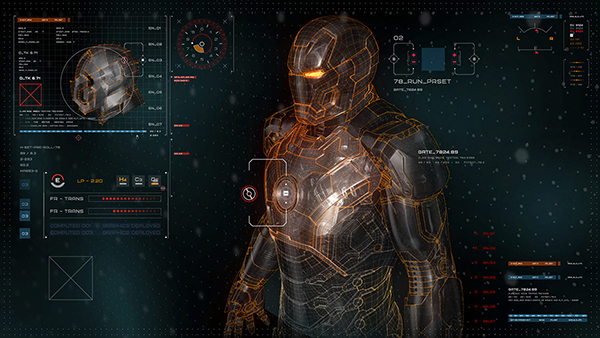
Future Specific to Creo Windchill
Specific changes to Creo we may see or wish to encourage or we may see in the near future?
Software Automation to enhance design: Automation occurs at the software level as well. Call it behavioral modeling artificial assist; PTC has been leading this for 10+ years. Coupled w/ various types of manufacturing vs 3d printing. That technology is here now. How will this evolve?
Sketcher mode: Creo competitors must have simple versions of Creo Parametric sketcher mode, not to mention an intent manager. As Artificial Intelligence (AI) tools become more prevalent, I foresee being able to train your version of your sketcher mode to recall approximately how you like to dimension sketches.
Artificial guesswork: Ever notice how Creo Parametric seems to often guess the opposite of what you want? Maybe our future tools will error using a simple AI to guess towards a larger mass of your model. Now we have Creo guessing more accurately.
Holographic Windchill – like when Tony Stark reaches up and replaces parts on the Iron Man suit (configurations pro program and windchill)

Topology Optimization – Where will Topology optimization going? What do you see as PTC’s next step in the development of that tool?
Cloud – can two people edit one file at the same time like how two persons can edit a Google document at the same time.
Generative Design – How will this evolve as a tool in our near future?
What are your ideas for the future of CAD? email me bart@designengine.com
Want to see coverage of this talk at COPUG 2019? Check out the video here!